
There is a dimension of travel in which the land is not merely crossed, but read like an open book. In Sicily, this reading unfolds with striking precision through cycle tourism—a practice that is transforming the island into a stage for uninterrupted narratives. It is not just about covering distances, but about immersing oneself in a millennial stratification where the landscape shifts as swiftly as the dialect changes from one valley to the next. The island offers a rare combination of wild solitude and vibrant hospitality, making every itinerary a journey of discovery that goes far beyond mere athletic performance.

The Hinterland: the silence of the villages and the allure of the unknown
The essence of Sicilian cycle tourism lies in its capacity to lead toward the unexpected. Far from the coastal crowds, the hinterland reveals itself as a labyrinth of roads forgotten by traffic, where the ridges of the Sicani Mountains and the heights of the Caltanissetta area offer landscapes reminiscent of great continental crossings. Villages such as Montedoro, Enna, or Sambuca di Sicilia are not merely waypoints, but guardians of a culture of hospitality with archaic roots. Here, the cyclist becomes a witness to a silent resistance against depopulation, where the “bike economy” is not just a technical term, but a vital lifeblood that relights the lamps of ancient inns and artisan workshops.
The stories emerging from these travel diaries often speak of chance encounters: shepherds pointing the way toward the old regie trazzere (historic sheep tracks), or elderly craftsmen in the squares of Gangi or Petralia Sottana recounting times when those very same roads were traveled by carts and mules. Cycling in Sicily means engaging with this historical memory, where every climb toward a perched castle or every descent into a golden valley of wheat becomes an act of participation in the island’s profound life.

Excellence and contrasts: from volcanic deserts to millennial forests, from Ciclovia dei Parchi to Sicily Divide
Sicily’s environmental variety is so vast it almost overwhelms the senses. In a single day in the saddle, it is possible to transition from the black, lunar landscapes of Mount Etna—where volcanic ash crunches beneath gravel tires—to the dense, humid forests of the Nebrodi Mountains, where high-altitude lakes reflect an image of the island that few can imagine. The Ciclovia dei Parchi (Park Greenway) represents perhaps the perfect synthesis of this biodiversity: a route that threads together the most significant natural reserves, offering a geological variety ranging from the limestone of the Madonie to the basalt of the Alcantara Gorges.
The Sicily Divide was born from a desire to rediscover the island’s hidden heart: its rugged interior. This vision inspired a route that cuts across Sicily from West to East, stretching from Trapani to Catania.
Designed for gravel or mountain bikes, the trail winds through secondary roads and unpaved tracks. It is a demanding challenge: most daily stages exceed 1,000 meters of elevation gain while remaining under 70 kilometers. Careful planning is essential, as the inland is more sparsely populated than the coast,
making food and water supplies crucial.
However, you can always rely on the legendary Sicilian hospitality. People here are always ready to lend a hand: stop to ask for a drop of water, and you’ll likely ride away with a ricotta sandwich in your belly and a cannolo tucked in your pocket.
Beyond nature, Sicilian excellence finds expression in the pairing of physical effort and restoration. The discerning cycle tourist knows that a stop is never just about nutrition, but a gastronomic exploration. Ancient grains cultivated in the central valleys are transformed into bread and pasta that regenerate the muscles, while extra virgin olive oil and wines from the volcanic soils speak of a minerality unique in the world. These excellences are not mere accessories, but the pillars of a travel experience that satisfies both body and spirit, transforming the strain of the climb into the prelude to a profound sensory reward.

Vision and the future: the innovation of slow mobility
Sicily is experiencing a renaissance linked to sustainable mobility. The digitalization of routes has made it possible to map, with pinpoint accuracy, itineraries that once belonged only to local memory. The use of GPS tracks and advanced navigation tools now allows cyclists to tackle even the most remote areas in total autonomy, providing the necessary security to fully enjoy the freedom of unsupported travel.
This technological development aligns with a forward-looking vision focused on deseasonalization. Sicily is a place where winter is often an extended spring, allowing for a cycling experience during periods when the rest of Europe is forced to rest. The golden light of November or the scent of orange blossom in February are not merely climatic details, but elements that define a new way of understanding active holidays: a suspended time, far from the crowds, where the island reveals itself in its most intimate form, stripped of the excesses of seasonal tourism.
The emotion of the invisible finish line
The true value of a cycling journey through Sicily does not lie in the destination, but in the inner transformation that occurs kilometer after kilometer. The experiences of those who have crossed the island horizontally—challenging the slopes of the Hyblaean Baroque or the winds of the salt pans between Trapani and Marsala—all converge toward the same sensation: that of having touched the soul of a continent in miniature.
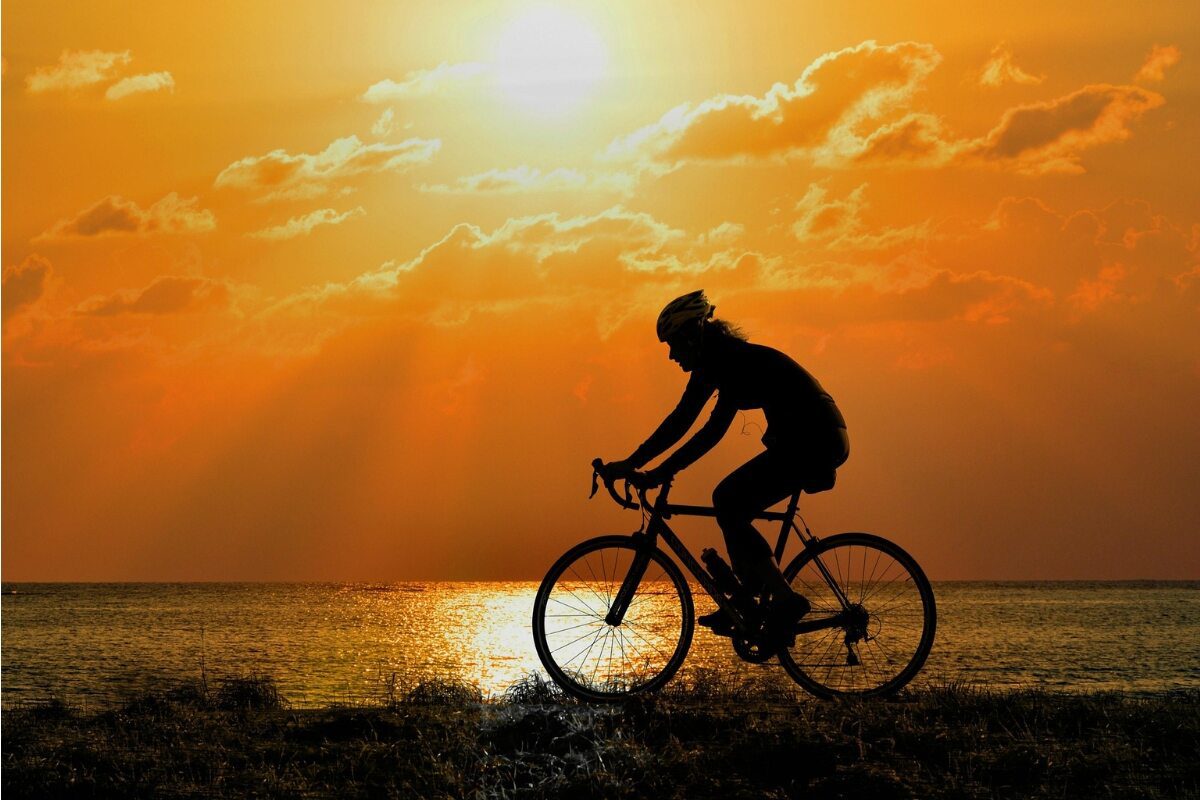
Cycle-tourism in Sicily reveals a land of authentic characters, of roads scented with wild fennel, and sunsets that seem to set the Egadi Islands on fire. It is a place where modern bicycle technology meets the slowness of centuries, creating an emotional short circuit that remains etched in the memory far longer than any technical data. Every pause in a village square, every water bottle filled at a mountain spring, and every glance exchanged with a farmer in the countryside of the Caltanissetta area contributes to a mosaic of memories that redefines the very concept of exploration.
Ultimately, Sicily presents itself as a destination where beauty is never taken for granted and where the journey requires effort but returns wonder in unexpected proportions. It is the blank page upon which every cyclist can write their own story, one itinerary at a time, within the folds of a land that seems born to be discovered slowly, one pedal stroke after another.