
Exploring the Algarve by bike means cycling through Portugal’s southernmost region, between the Atlantic and the hills of the interior. It has around 200 km of coastline, more than 300 days of sunshine a year and mild winters. That makes it one of the few European destinations where you can ride comfortably even in the months when bikes back home stay in the garage.
Cycle touring in the Algarve has two sides that can be combined. A continuous cycle route runs along the coast, the Ecovia do Litoral. The interior is made up of hills, cork oak woods and quiet whitewashed villages. In this guide you’ll find the best time to go, the main routes and practical tips for planning your trip. If you’re organising a longer journey, you’ll find more ideas among our cycling holidays in Portugal.
When to go to the Algarve by bike: the best time
The best time to visit the Algarve by bike is from October to May. In winter daytime temperatures are around 16-17°C, rain is rare and the roads are quiet: it’s the right moment to extend the season or train away from the cold. In spring the interior is full of blossoms and temperatures are ideal even for stages with climbing.
Summer is hot, especially inland, while on the west coast Atlantic breezes make the climate more bearable. If you travel in July or August, ride in the early hours of the morning. Autumn is the most underrated season: the sea is still warm, the beaches empty out and accommodation costs less.
Ecovia do Litoral: the Algarve’s coastal cycle route (EuroVelo 1)
The Ecovia do Litoral is the region’s main cycle route. It runs for about 214 km from Cape St. Vincent, near Sagres, to Vila Real de Santo António, on the Spanish border along the Guadiana river. It is divided into 12 sections and crosses 12 municipalities, so it works both for the full journey and for day rides.
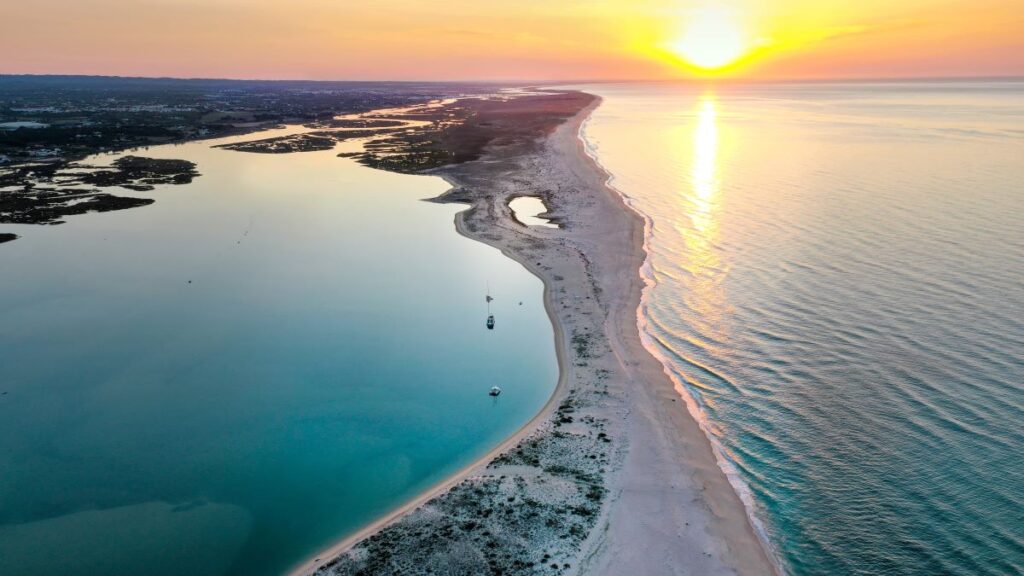
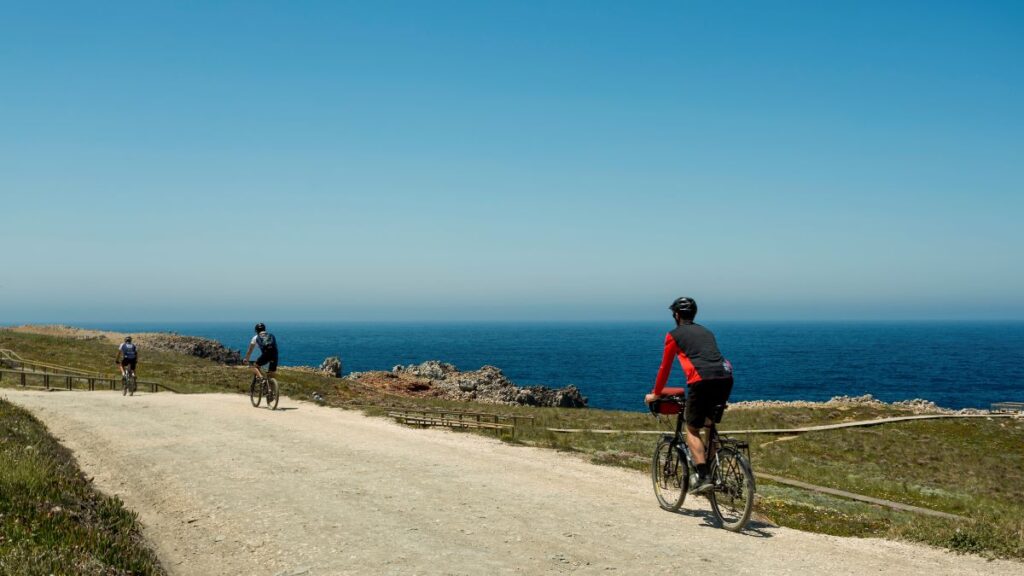
The route changes a lot from west to east. In the western part the coast is high and rugged, with a few more ups and downs. Heading east the terrain becomes flat and the route skirts lagoons and salt pans, passing the Ria Formosa Natural Park. The surface alternates between dedicated cycle paths, quiet back roads and easy gravel. If you want to discover the route in detail, from the salt pans of Castro Marim to the cliffs of the Costa Vicentina, read our account of the Ecovia do Litoral by bike.
The Ecovia is part of EuroVelo 1, the Atlantic Coast Route, and lets you continue into Andalusia or head north through Portugal. At a touring pace it takes 4-6 days (to learn more: Eurovelo)
Via Algarviana by bike: the interior for mountain bikes and gravel
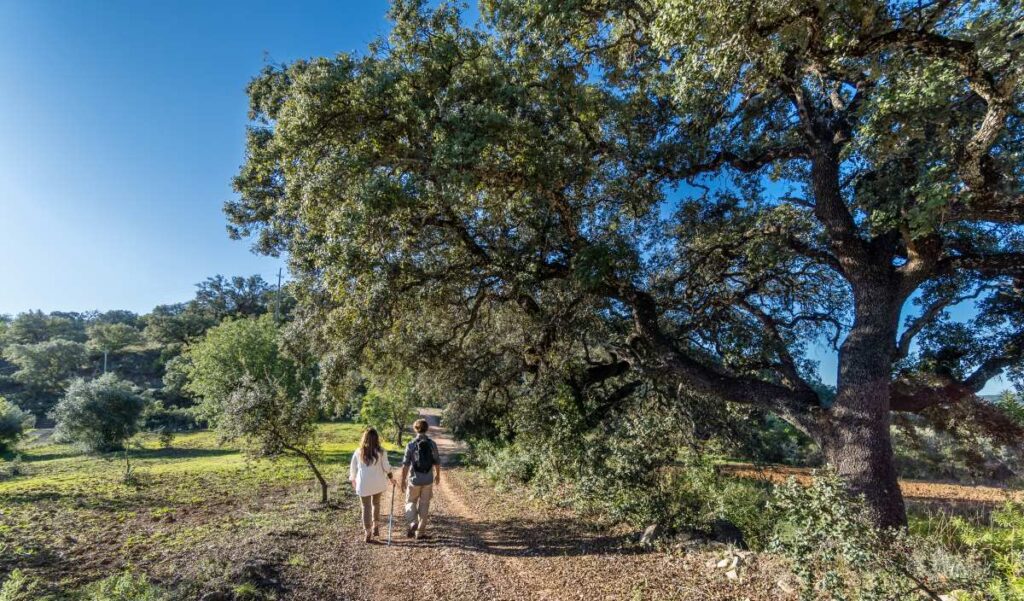
The Via Algarviana crosses the interior from Alcoutim, on the Guadiana, to Cape St. Vincent. It covers 300 km in 14 stages, none longer than 30 km, passing through the Caldeirão and Monchique hills. It is the rural face of the region: quiet villages, cork oak woods, few cars and plenty of climbing.
If you want to ride the Via Algarviana, you should know that it was created as a hiking trail. Some sections can easily be ridden on a mountain bike or gravel bike, while others are narrow paths where you have to push the bike. It’s worth studying the stages one by one on the official website [external link: viaalgarviana.org] and planning detours on back roads where needed.
Rota Vicentina: cycling and hiking on the west coast
The Rota Vicentina is a network of more than 400 km of trails between Cape St. Vincent and Santiago do Cacém, along the Alentejo and Vicentine coast. It crosses one of the most unspoilt stretches of coastline in Europe, protected by a natural park, with cliffs, secluded beaches and fishing villages.
It is designed mainly for walkers, but it fits well into a cycling trip: you ride up the coast on the roads running parallel to the trails and leave the bike to walk the most scenic stretches.
The Algarve by ebike: which routes to choose
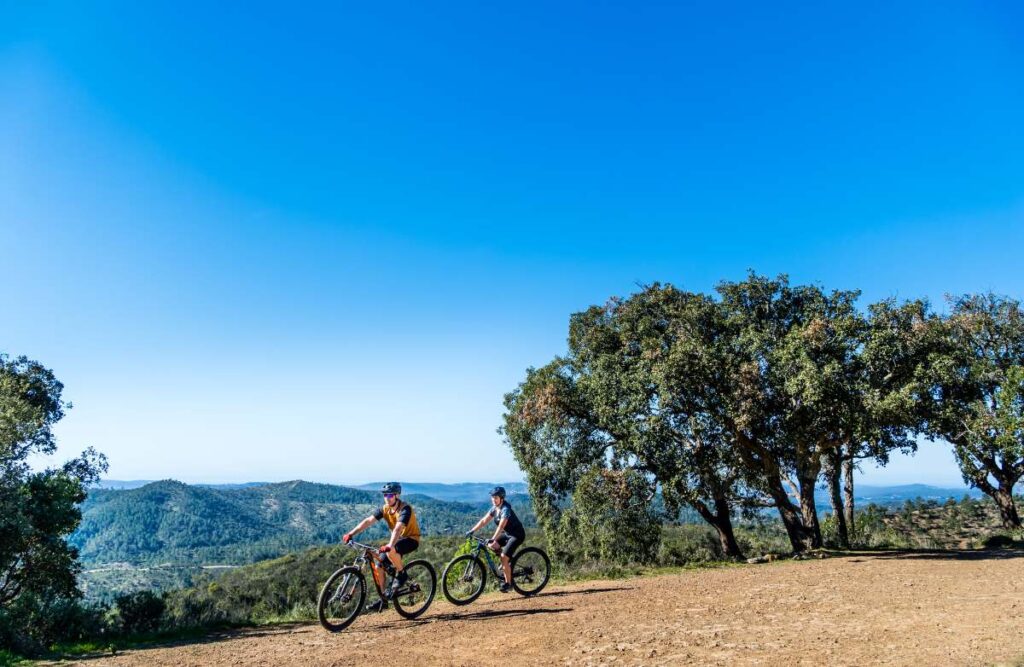
Visiting the Algarve by ebike is a good option for anyone who wants to enjoy the trip without worrying about elevation. The eastern coast of the Ecovia, between Faro and Vila Real de Santo António, is flat and suitable for everyone, including families. The western part and the interior are more demanding, but with pedal assist they become accessible even to less trained riders.
If you travel by ebike you need to plan your stages around battery range, especially inland, where villages are far apart. Before booking, check that your accommodation lets you charge the bike and keep it safe overnight. Here’s how to protect your bike on holiday and what to do if it’s stolen.
How to get to and around the Algarve with your bike
The most convenient gateway is Faro airport, halfway along the coast, from which you can reach the Ecovia in a few kilometres. From there you choose whether to head west, towards the cliffs of Sagres, or east, towards Spain.
To get back to your starting point you can use the regional railway line between Lagos and Vila Real de Santo António. Trains accept bikes, but space on board is limited. In the hotter months you’ll need plenty of water and sun protection. On the Via Algarviana you’ll need sturdy tyres and low gears, while on the coast a touring or gravel bike is enough.
What to do in the Algarve besides cycling
On rest days the Ria Formosa can be explored by boat or on foot and is the best place for birdwatching, together with the wetlands along the Guadiana. On the west coast, between Sagres and Aljezur, you’ll find some of Portugal’s best-known surf spots.
Local cuisine is based on grilled fish, cataplana and seafood. In the interior, markets and whitewashed villages are natural stops along the routes, and also useful for restocking.
At the Cycle Tourism Show
If you’re thinking about a trip to the Algarve by bike, you can talk to the people who promote the destination: the Algarve is among the exhibitors at the Cycle Tourism Show, from 19 to 21 March 2027 at Padova Fiere. Register to attend.
For more information there’s also the official Visit Algarve website.