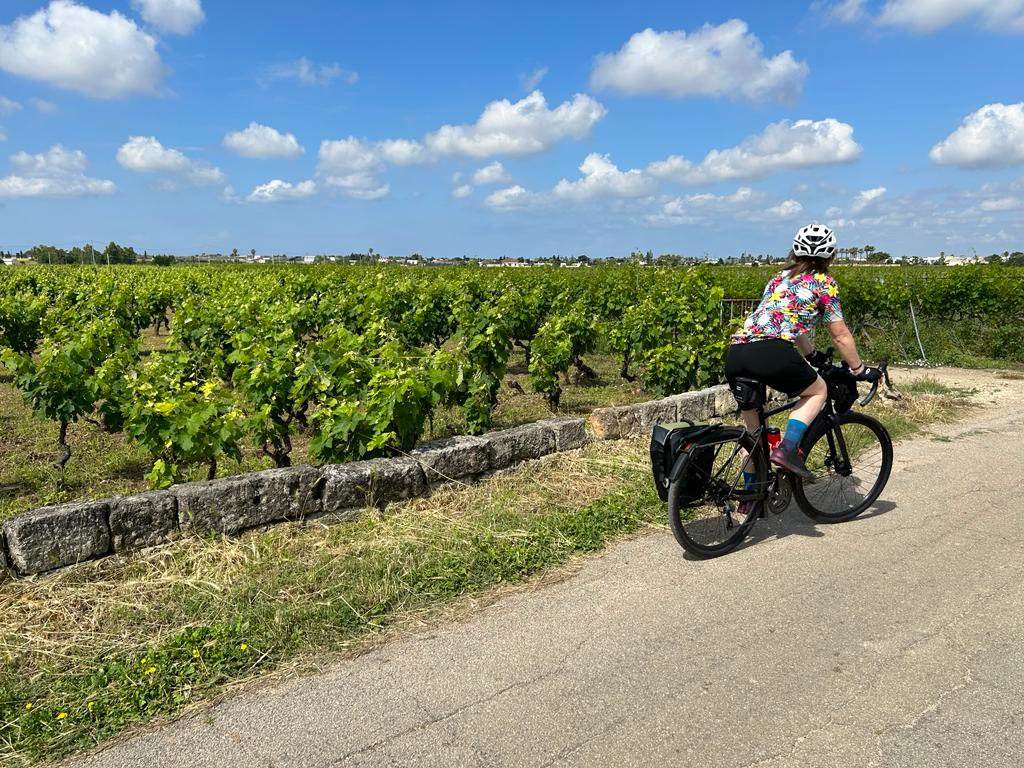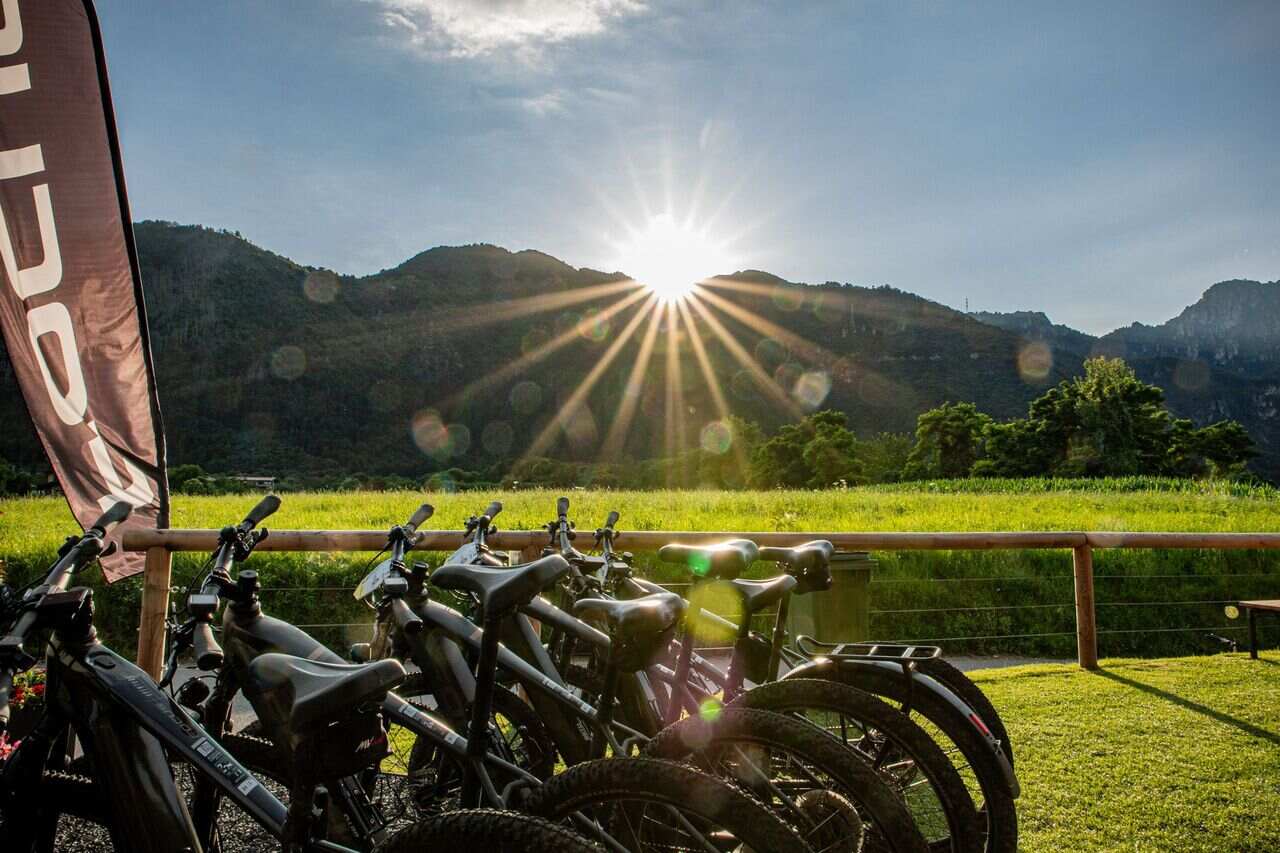

In 2024, the Giro d’Italia’s pink caravan once again traversed some of these routes, which shaped this ideal Giro d’Abruzzo by bicycle. Cycling along these roads reveals a unique region that becomes even more enchanting when explored at the leisurely pace of a bicycle.
The route includes four moderately challenging stages, totaling 659 km, which cycling enthusiasts can tackle at their own pace. This allows ample time to immerse themselves in the region’s natural wonders, historic villages, monumental castles, and frescoed churches, stretching from the Adriatic beaches to the highest peaks of the Apennines.
1st stage: Vasto-Pescara (161 km)

Located on the Gulf of Gold, Vasto boasts numerous architectural excellences, starting from the imposing d’Avalos palace with its Neapolitan garden and enchanting view over the Coast of Trabocchi, to the archaeological area of ancient Roman Histonium.
Continuing north along the state road 16, Torino di Sangro is characterized by the natural reserve of Lecceta, one of the last coastal woods still visible in Italy between Gargano and Conero. Climbing towards Fossacesia, the Benedictine abbey of San Giovanni in Venere shines among the olive groves. We then arrive in Lanciano – city of the double Eucharistic miracle – and then take the Frentana state road 84 towards Castel Frentano, home of the delicious bocconotto, and skirt the area of the Serranella lake reserve, in the territory of Sant’Eusanio del Sangro, Casoli and Altino, reaching Casoli, dominated by its Ducal castle.
From here, we proceed on the state road 81, one of the most scenic in Abruzzo, with Guardiagrele as our destination, the wonderful stone city narrated by d’Annunzio, and then descend towards Chieti where the rooms of the Archaeological Museum Villa Frigerj house the statue of the Warrior of Capestrano.
After crossing the valley of the Pescara river, we enter the province of Pescara touching Pianella, with its splendid church of Santa Maria Maggiore, until we end the itinerary in the Adriatic capital to enjoy a spectacular view at sunset from the cycle path Ponte del Mare.

2nd stage: Alanno-Magliano de’ Marsi (161 km)
After skirting the town of Scafa from where you can reach the equipped park of the sulphurous springs of Lavino by bicycle thanks to the recently inaugurated cycle and pedestrian path, continuing along the Val Pescara you encounter the wonderful Cistercian abbey of San Clemente in Casauria and then arrive at Popoli Termethe city of waters hosting the regional reserve Sorgenti del Pescara.
Entering the Peligno area, from Raiano you reach Goriano Sicoli through the territory of the regional reserve Gole di San Venanzio. Climbing to the 1100 meters of the Forca Caruso pass, the Marsican area of Fucino opens up before our eyes. Proceeding clockwise, we touch the centers of Pescina, the birthplace of writer Ignazio Silone and Cardinal Giulio Mazzarino, remembered by two museum houses; Ortucchio and its fortified dock on the shores of the former lake basin; up to Trasacco and its original Febonio tower, square at the base and circular at the top.

Cutting sharply through the fertile plain where potatoes and IGP carrots are cultivated and appreciated all over the world, Celano is characterized by the presence of its mighty Piccolomini castle. Just a few more kilometers to complete the stage before admiring the archaeological area of Alba Fucens with the church of San Pietro in Albe and its splendid polychrome mosaic iconostasis.
3rd stage: Pratola Peligna-Prati di Tivo (163 km)
From the Peligna Valley to the Subequana, Abruzzo is a wonder that continually renews itself. After passing Raiano, the climb towards the Altopiano delle Rocche and the protected environment of the Regional Park Sirente Velino begins, crossing the villages of Castelvecchio Subequo, Gagliano Aterno, and Secinaro, up to the Forcella pass which leads to Rocca di Mezzo, colored in spring by the floats set up for the Narcissus Festival.

After the ski facilities of Campo Felice, the long descent towards Lucoli begins, skirting the Aquilan fraction of Preturo to reach Pizzoli.
You cycle along the upper Aterno Valley crossing Montereale and then turning right to reach Capitignano, a place of cultivation of parsnip, a local tuber protected by the Slow Food Presidia brand. We then enter the territory of the Gran Sasso and Monti della Laga National Park. After passing Lake Campotosto, the province of Teramo welcomes us with chestnut woods around Senarica di Crognaleto.

Arriving at Fano Adriano, the steep climb towards Pietracamela begins and the Prati di Tivo spread out at the foot of the Corno Piccolo of the Gran Sasso d’Italia, the final destination also of the Apennine stage of the next Giro d’Italia.
4th stage: Montorio al Vomano-L’Aquila (173 km)
Proceeding along the Val Vomano, after a few kilometers, you reach Penna Sant’Andrea, in whose territory lies the Regional Reserve Castel Cerreto.
Cycling along state road 81 among the vineyards of Montonico grapes recognized as a Slow Food Presidium, after passing Cermignano and Cellino Attanasio, you enter the province of Pescara welcomed by the town of Penne, with its artificial lake hosting a regional reserve from where walks and cycle paths immersed in nature depart.
Proceeding towards the Apennine heights, after Carpineto della Nora and its splendid Benedictine abbey of San Bartolomeo, through the Forca di Penne pass, you enter the Aquilan Abruzzo.

The road leading to Castel del Monte retraces the ancient transhumance routes. Along the hairpin bends drawn between the infinite openings of Campo Imperatore, finally descending you arrive at Calascio, where the visit to the scenic castle clinging to the rock in the fraction of Rocca Calascio is unmissable.
We pass also Castelvecchio Calvisio, the village of San Pio delle Camere, also characterized by an ancient triangular-plan castle. We are in the lands of the Navelli Plateau, home of the prestigious Saffron of Aquila DOP.

The next Italian Capital of Culture 2026, the regional capital is now at the gates with its load of history and artistic masterpieces of rare beauty, from the Castle to Basilica Santa Maria di Collemaggio whose Holy Door has welcomed for 730 years the rite of the Celestinian Forgiveness,which is recognized by Unesco in 2019 as intangible cultural heritage of humanity. intangible cultural heritage of humanity..
To recreate your own Tour of Abruzzo by bike: www.abruzzoturismo.it